
Designing With AI: Why Human Creativity Still Matters
Artificial intelligence has changed the creative industry.
Designers can now generate images, explore concepts, develop layouts, write copy, and experiment with ideas faster than ever. What once required hours of research, production, and iteration can sometimes happen in minutes.
For businesses, the possibilities are exciting. AI can make creative production faster, more accessible, and easier to experiment with.
But for designers and creative professionals, it also raises a bigger question:
If AI can create so much, what happens to human creativity?
The answer isn't that creativity becomes less important.
It becomes more important.
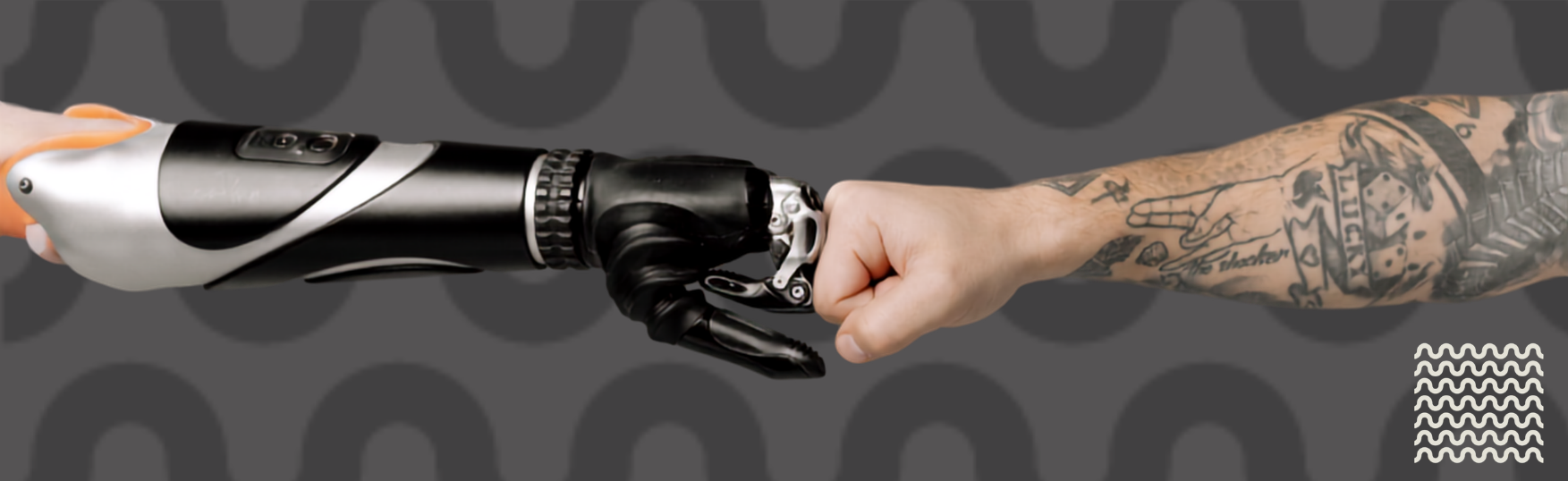
The future of design isn't about choosing between humans and AI. It's about understanding what each does best, and knowing where technology should support creativity rather than replace the thinking behind it.
AI Has Changed the Creative Process
AI has quickly become another tool in the creative process. Designers can use it to explore creative directions, generate visual concepts, develop variations, brainstorm ideas, and speed up repetitive production tasks.
That can be incredibly valuable.
Instead of spending hours creating every possibility manually, designers can explore more directions in less time. AI can help visualize an idea before it becomes a finished design, provide alternative approaches, or simply help a creative team get unstuck.
But speed has never been the same thing as quality.
AI can generate hundreds of ideas. That doesn't mean hundreds of good ideas.
A brand doesn't need more content simply because technology makes content easier to produce. It needs the right content for the right audience, at the right moment, for the right reason.
A beautiful AI-generated image can still fail if it doesn't represent the brand, connect with the audience, communicate the right emotion, or support the business objective.
Technology can increase the speed of production.
Strategy determines the direction.
This is one of the reasons we believe design should be viewed as more than decoration. In our blog, ROI by Design: The Blueprint for Visual Marketing, we explore how intentional visual marketing can influence attention, trust, engagement, and business growth.
The same principle applies to AI. Having a powerful creative tool doesn't automatically create a powerful brand.
What Makes Creative Work Meaningful?
A design isn't valuable simply because it looks good.
It needs a reason to exist.
A brand identity needs to communicate something about a business. A website needs to guide people toward an action. A social media post needs to earn attention. A campaign needs to create an emotional connection.
Those decisions require more than generation.
They require empathy, context, experience, taste, cultural understanding, and judgment.
These are the qualities that give creative work meaning.
AI can recognize patterns and generate possibilities based on the information it has been given. But a human creative professional brings perspective to the problem. They can ask whether an idea feels appropriate for the audience, whether it reflects the brand's personality, and whether it communicates something worth remembering.
That's the difference between generating something and creating something with purpose.
And as AI-generated content becomes increasingly common, that distinction may become even more important.
When everyone has access to similar tools, the tools themselves stop being the differentiator.
Your point of view becomes the differentiator.
Two businesses can use the same AI platform and produce completely different results because their strategies, audiences, personalities, and creative direction are different.
That's why brand clarity needs to come before aesthetics, or technology. We explored this idea inBrand Clarity Before Aesthetics, where we look at why understanding what a brand stands for should come before deciding how it should look.
The New Creative Partnership
The most useful way to think about AI isn't as a replacement for designers.
It's as a creative partner.
A traditional creative process might move from an idea to design, review, refinement, and completion. With AI, that process can become much more exploratory:
Strategy → Idea → AI Exploration → Human Direction → Design → Refinement
〰️
Strategy → Idea → AI Exploration → Human Direction → Design → Refinement 〰️
AI can help expand the number of possibilities.
The human decides which possibilities are worth pursuing.
That distinction matters because creativity isn't simply about producing something. It's about understanding why something should be produced in the first place.
This is also where businesses need to be careful.
AI makes it incredibly easy to create more—more social posts, more graphics, more videos, more advertisements, and more website content.
But more isn't automatically better.
Without a clear strategy, brands can quickly become noisy, inconsistent, and forgettable. The technology may be impressive, while the overall brand experience becomes less meaningful.
AI should support your brand strategy, not replace it.
The Future Is Human + AI
AI will continue to change how we design, market, and communicate. Some creative tasks will become faster. New workflows will emerge. Some traditional processes will disappear.
That's not necessarily something to fear.
Every major technological shift in design has changed the way creative professionals work. The tools evolve, but the need for ideas, perspective, storytelling, and human connection remains.
In fact, as AI makes generic creative work easier to produce, meaningful creative work may become even more valuable.
When everyone can generate an image, the idea behind the image matters more.
When everyone can create a logo, the strategy behind the identity matters more.
When everyone can produce content, the perspective behind the content matters more.
We've seen how a strong creative idea can turn a simple concept into something memorable. Our recent article, What Heinz's World Cup Campaign Teaches Us About Great Branding, explores how creativity and cultural relevance can work together to create a campaign people remember.
The future of design isn't humans versus artificial intelligence.
It's humans working with artificial intelligence.
AI brings speed. Humans bring judgment.
AI brings possibilities. Humans bring purpose.
At JOBA Studio, we believe technology should expand creativity—not replace the thinking behind it.
Because AI can generate the possibilities.
Human creativity gives them purpose.
Ready to Create Something With Purpose?
Whether you're building a brand, refreshing your visual identity, improving your website, or looking for smarter ways to create content, JOBA Studio can help bring strategy, creativity, and technology together.
Visit jobastudio.com to explore our work and start your next project.
