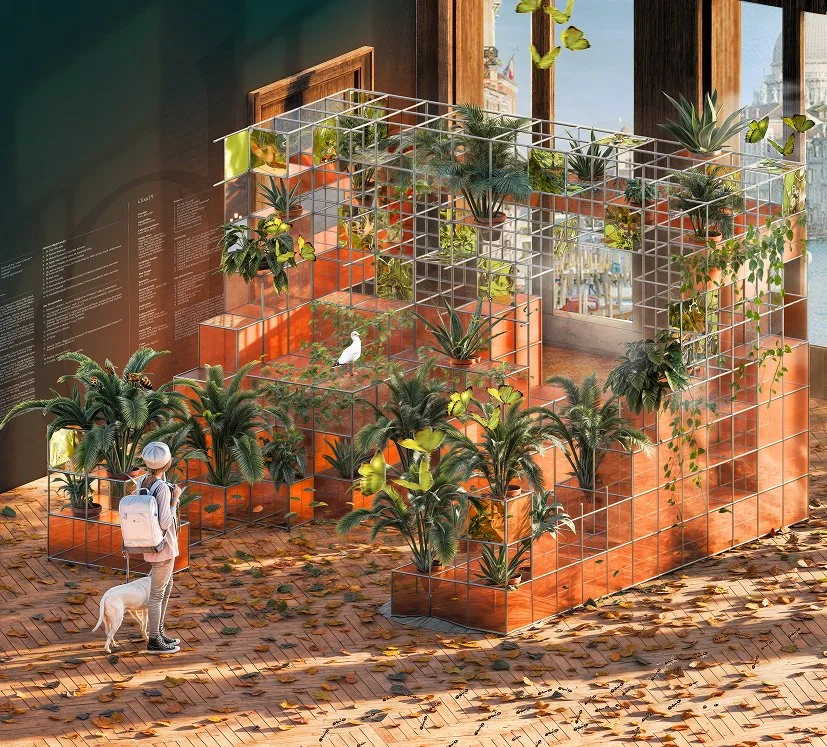


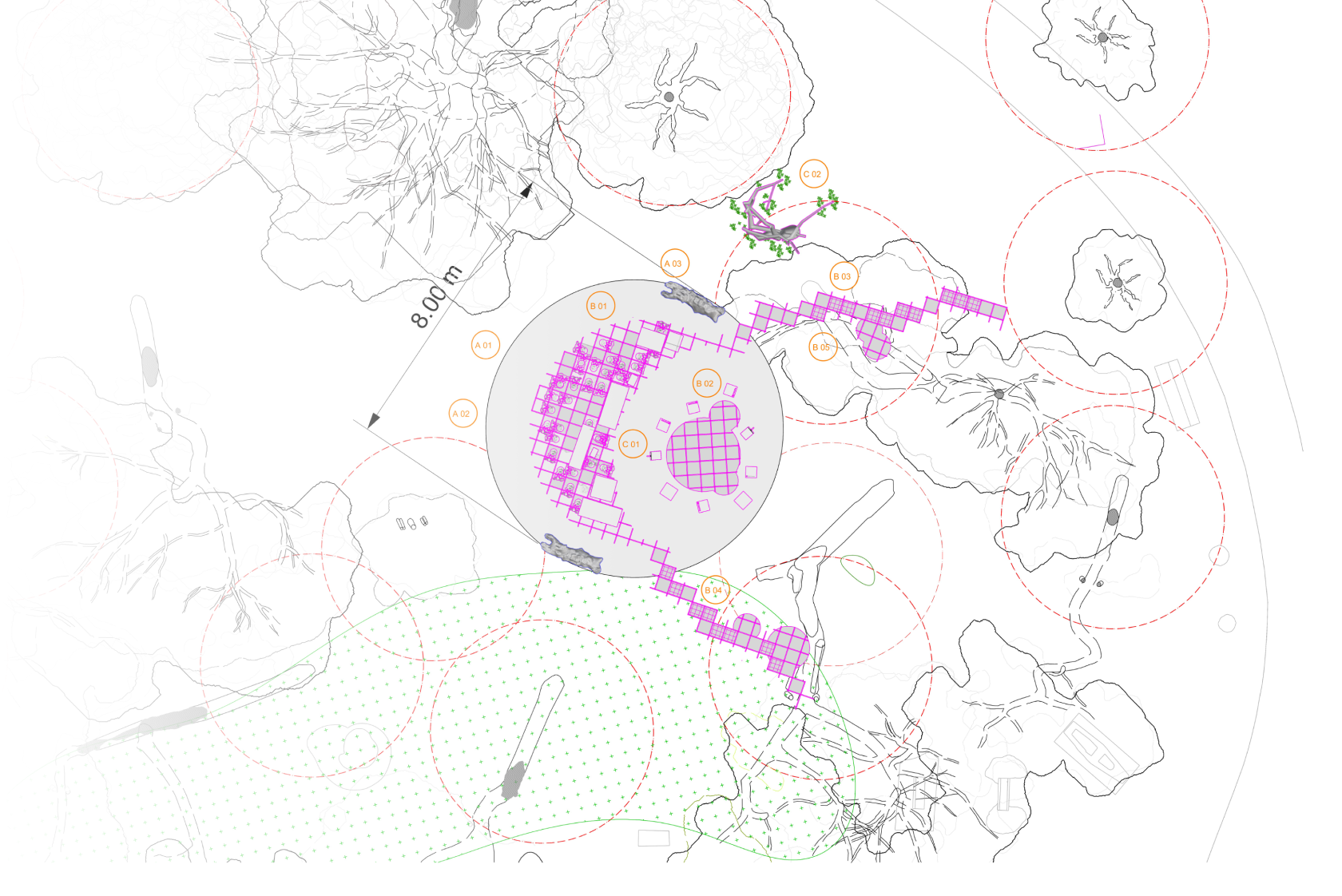
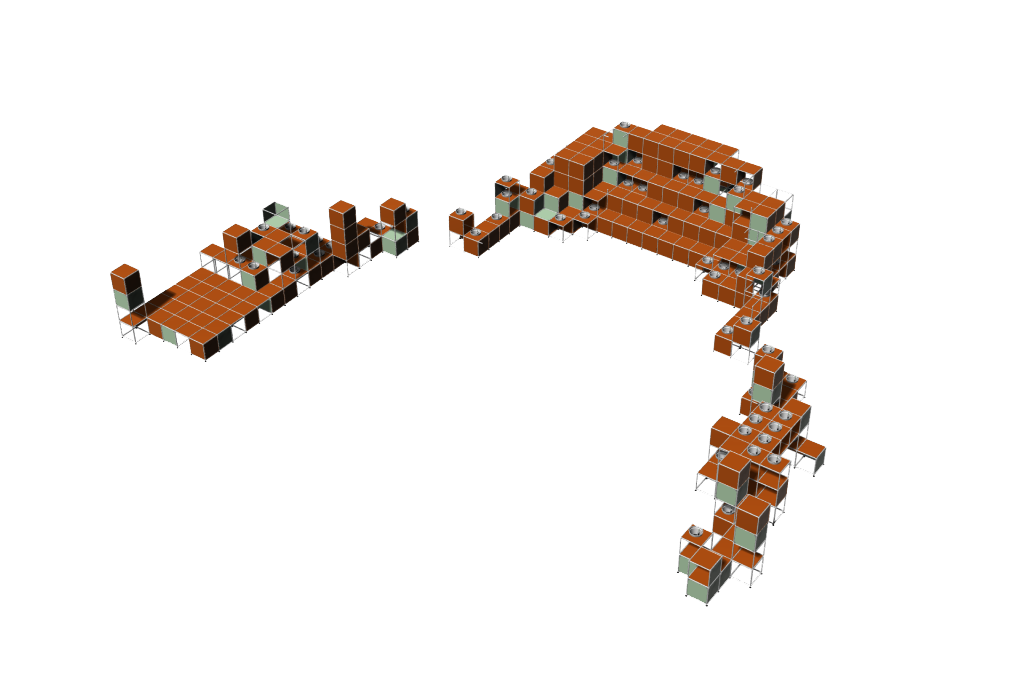
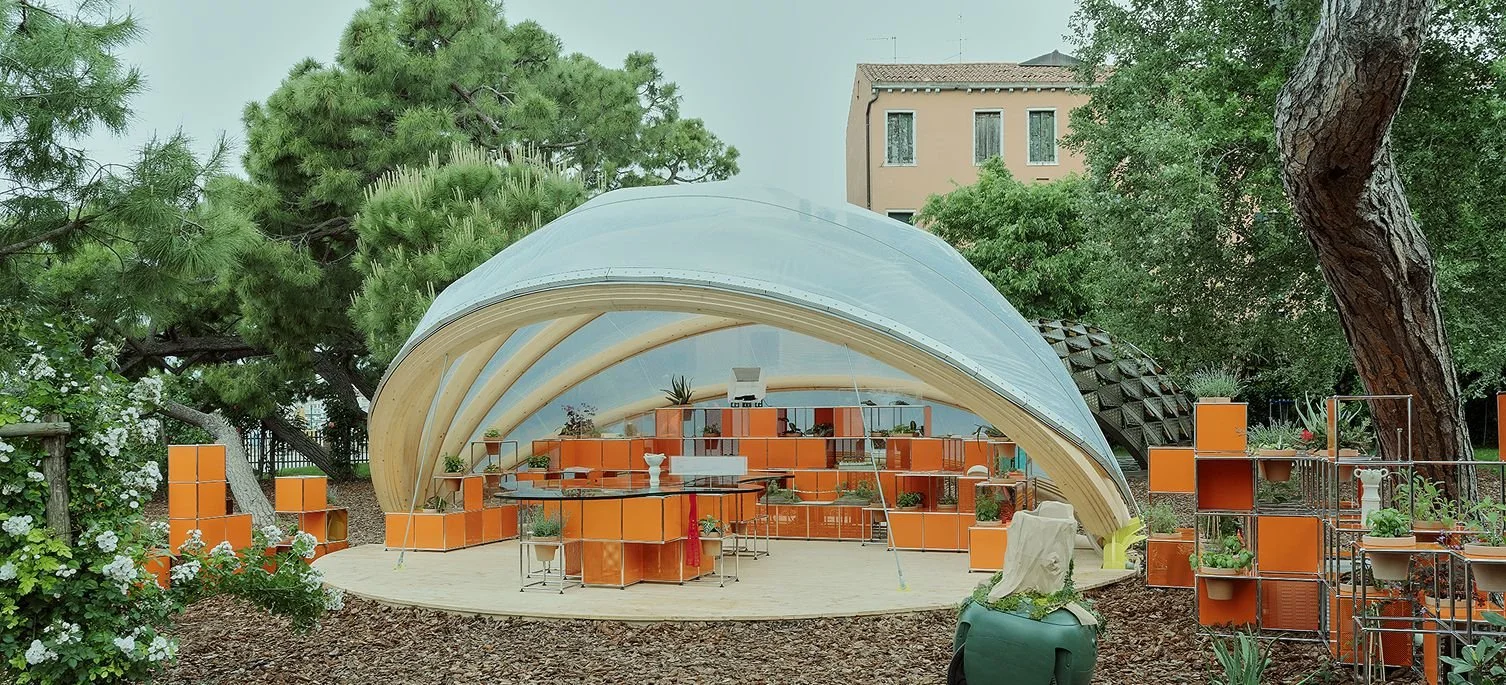
Under the architecture, the USM furniture branches into the garden. These “tentacles” that extend beyond the architecture hold projects, graphics, and speakers that circulate sound throughout the space. These tentacles invite visitors into the pavilion, where a continuous curvature of furniture and projects display the transdisciplinary success of Virginia Tech’s Honors College.
Pavilion Design Intent
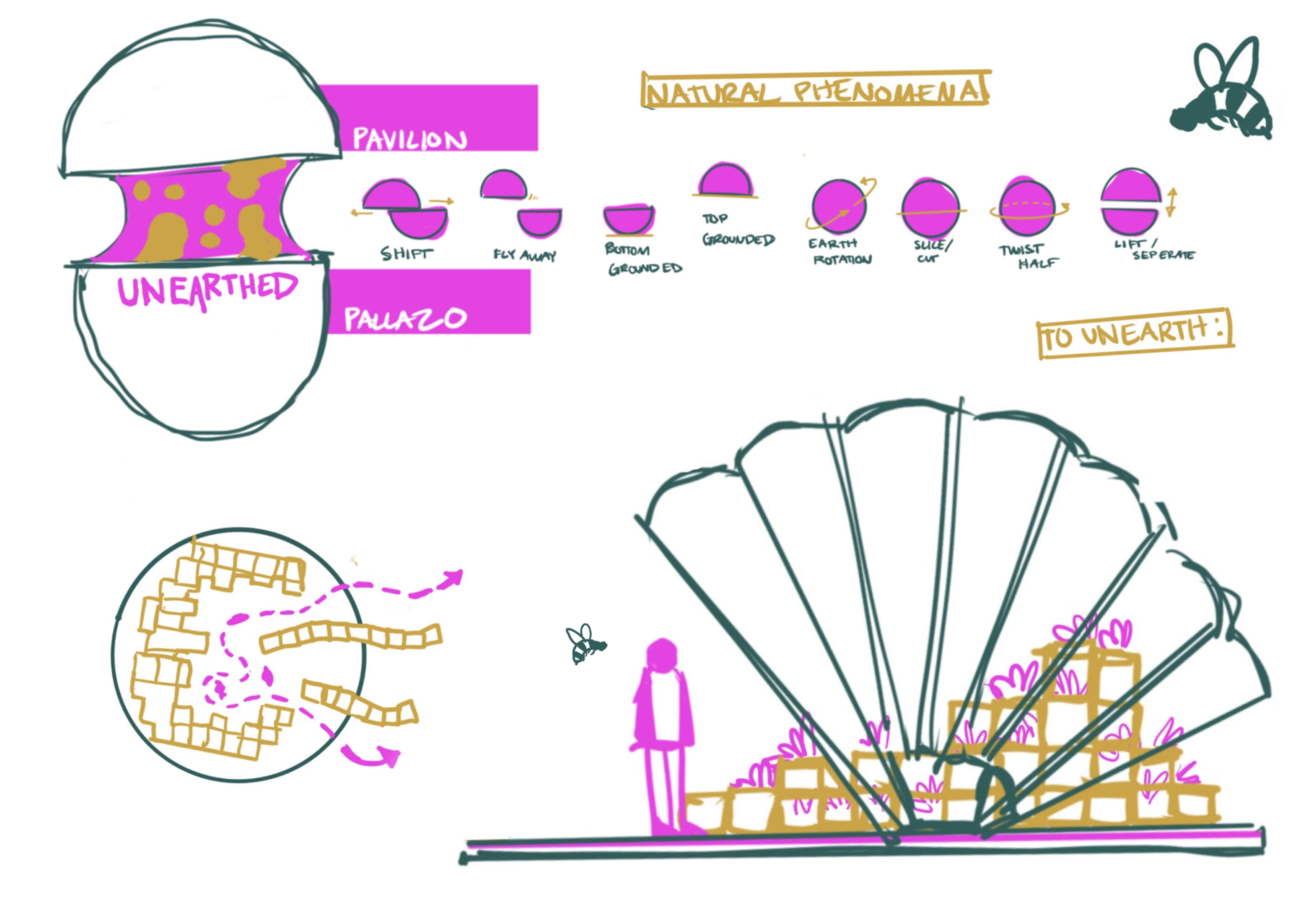
The action of un-earthing allows us to uncover the processes that drive nature and fuel transdisciplinary collaboration. The theme Observatory serves as a vehicle to witness those processes.
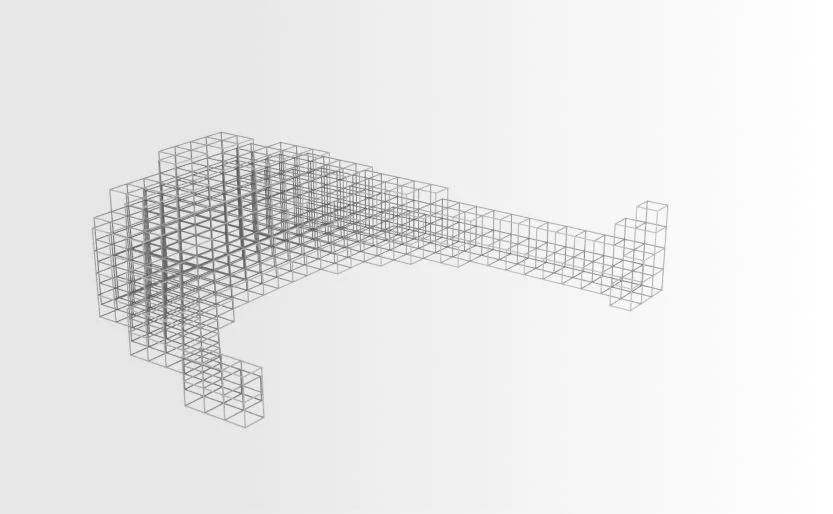
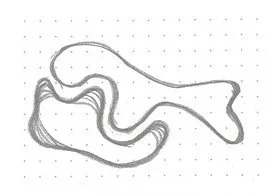
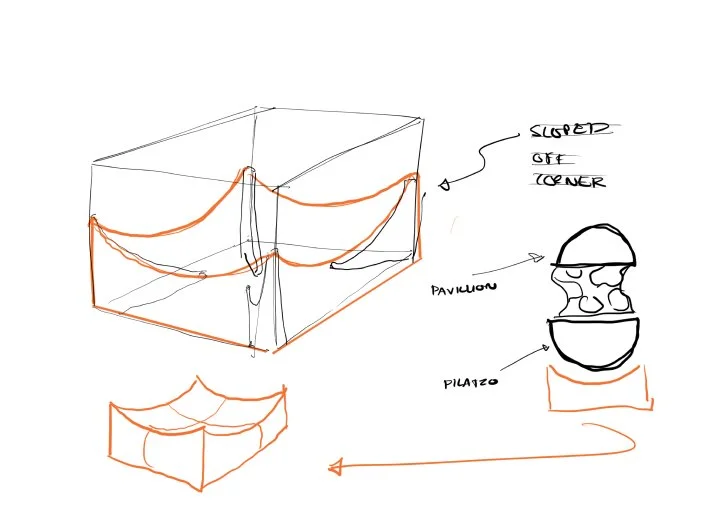
In a physical effort to unearth, a sphere intersects a cubic grid to create a positive and a negative. These two shapes inform and connect the palazzo and pavilion.

Designing For Context
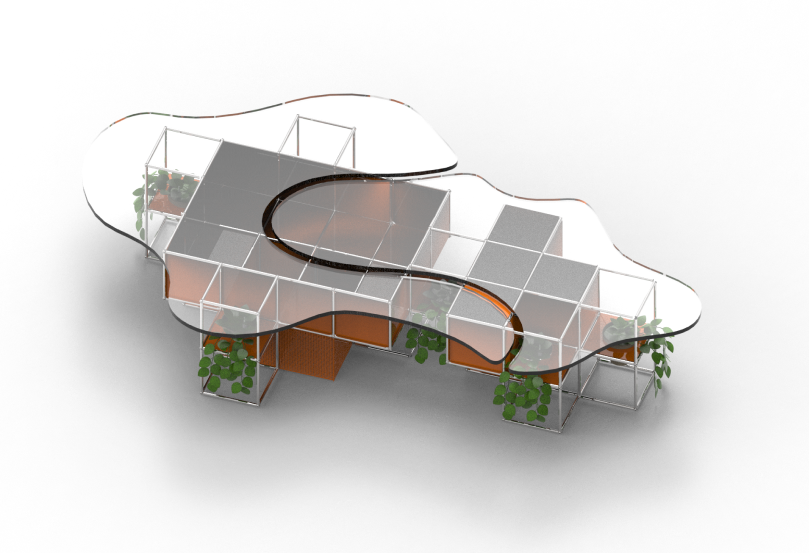
The center table is designed to fit up to 12 people. The two piece glass table top references the canal that runs through Venice, and it gives way to a screen that show’s the pollination patterns of different creatures within the garden. Every piece of furniture for the exhibition is designed in respect to the environment and context of Venice.
Palazzo
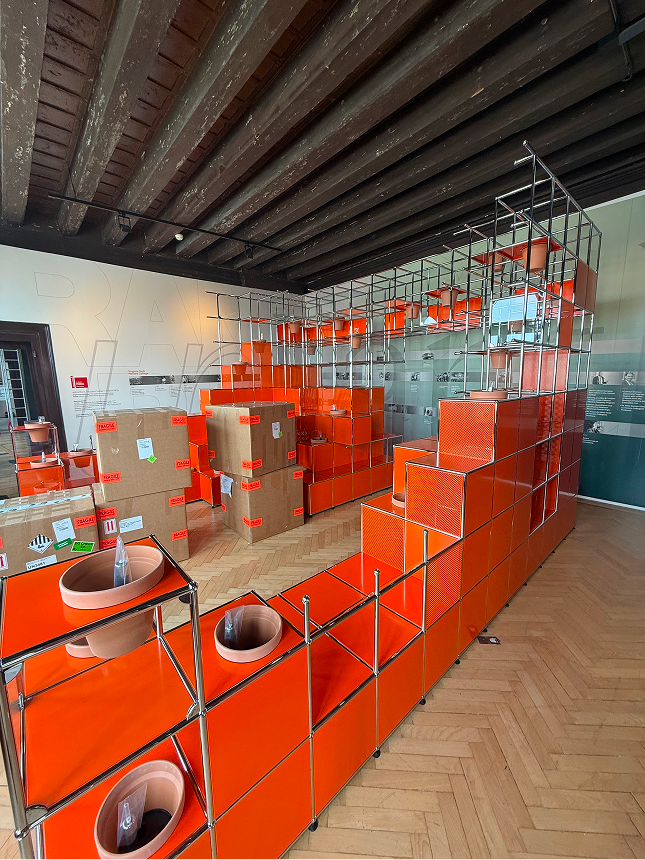
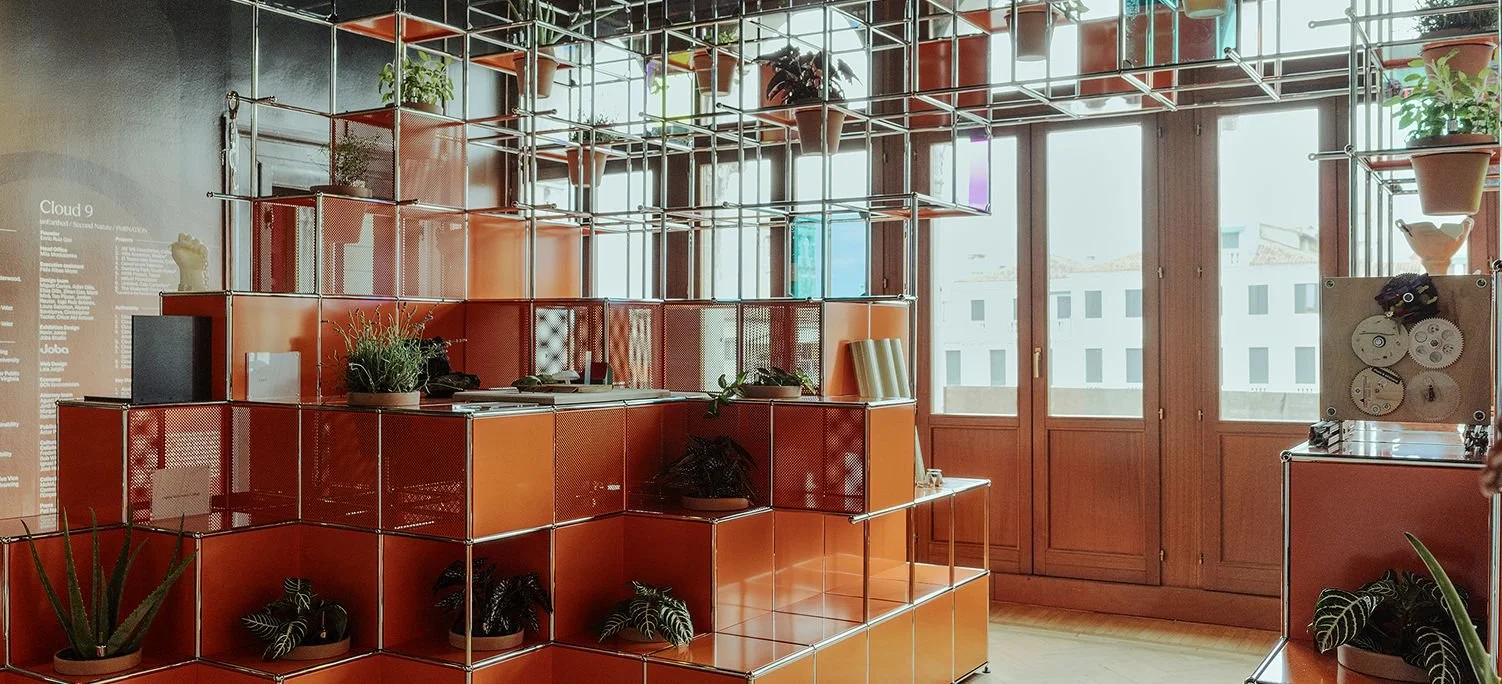
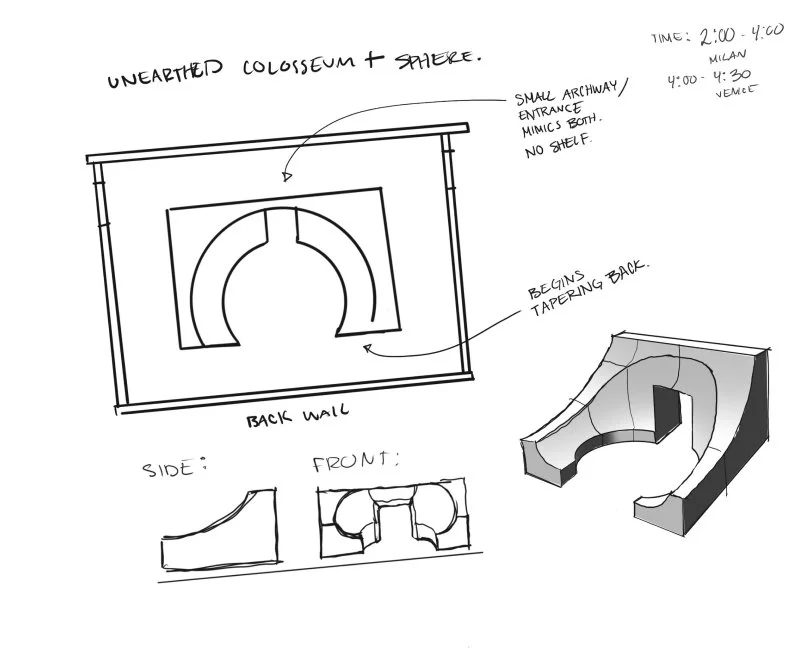
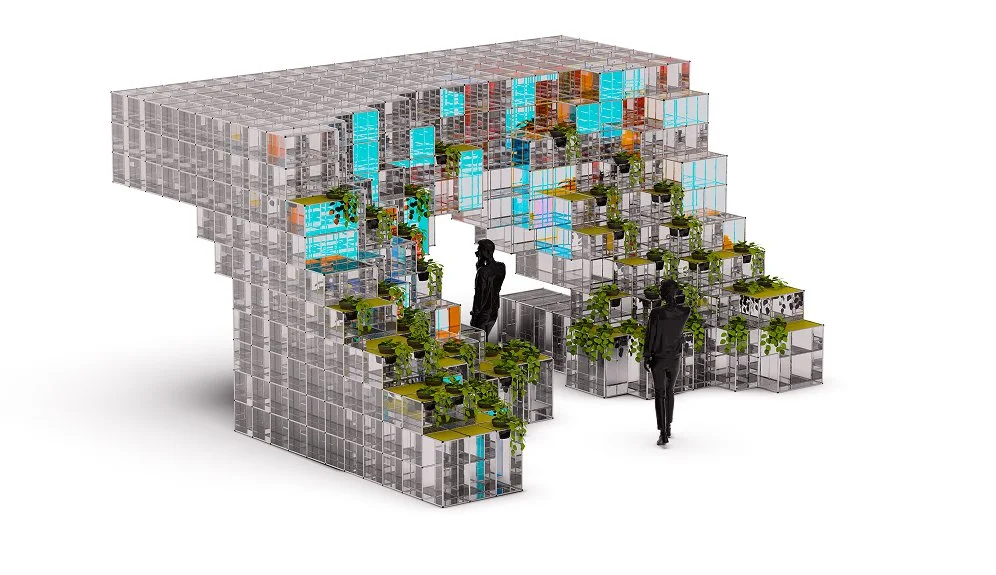
The Palazzo is designed in reference to a colosseum, which is an architecture intended for spectating; a perfect tool for witnessing natural phenomena. The furniture becomes lighter as it reaches the ceiling, creating a hierarchy that reflects the architecture in the garden. USM’s orange is used symbolically, representing earth and clay - material found as a physical result of digging or “unearthing”.
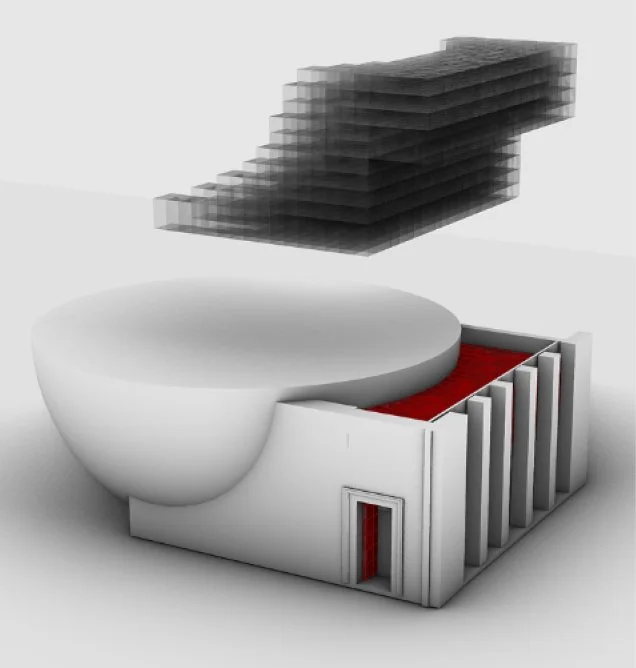

Curation
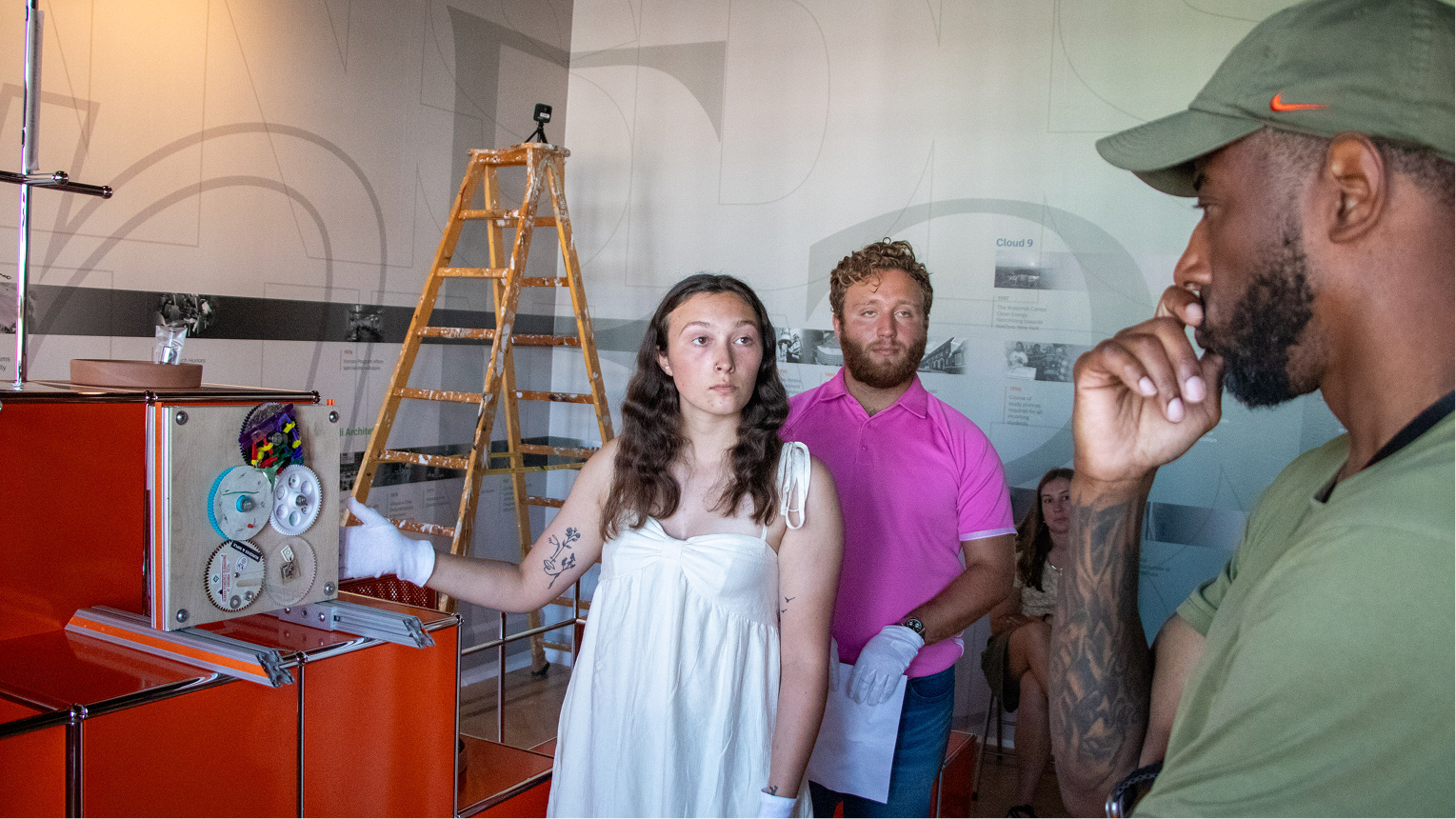
Every project in both spaces was carefully integrated into the furniture, creating unique moments and viewing scenarios for each. The Palazzo breaks the norms of how USM’s furniture typically exists; tubes floating amongst the structure are a result of the intersection of the sphere and the grid, allowing viewers to visually perceive a curvature within the furniture. Dichroic glass is illuminated from the exterior windows, and the furniture opens itself for visitors to view a timeline depicting the history of Cloud-9 Architecture, the Virginia Tech Honors College, and the Venice Architecture Biennale.